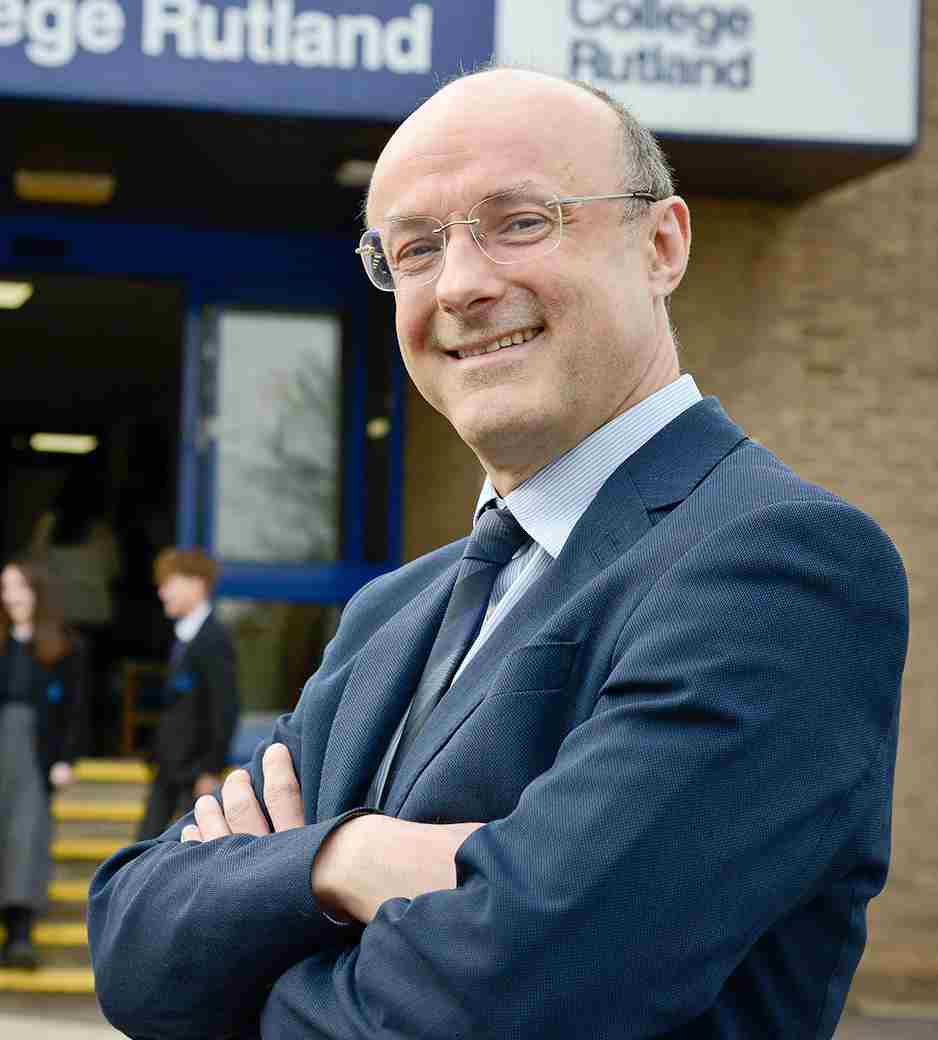
 Carl Smith is Principal of Casterton College Rutland, a successful comprehensive school situated just a few miles from the border of selective Lincolnshire. With 70% of his pupils arriving from a system built around the 11-plus, he sees every day how early selection shapes confidence, opportunity, and community identity.
This piece is the full text of Carl’s remarks at Comprehensive Future’s Westminster panel event in November 2025, shared with his permission.
I’m Carl Smith, Principal of Casterton College Rutland, a single-academy trust. Rutland is statistically the most successful comprehensive authority in the country — all of our schools are comprehensive — but we sit right on the border with selective Lincolnshire. About 70% of our pupils come from Lincolnshire, and the majority have “not passed” the 11-plus. I use that term deliberately.
When I became head, I made it my mission to dismantle the sense of failure many children arrive with. But it’s not just the children — parents often see their own child as “second best” if another sibling got into the grammar school. It creates hierarchies within families and communities.
Just three miles over the border there are selective schools, and families in the villages around us see a very clear ladder: grammar at the top, then the comprehensive, then what used to be called the secondary modern. Those secondary modern schools often do excellent work, yet the stigma remains.
This is why we built our school ethos around one message: “Your ability is not fixed.” Every pupil knows it — they’re probably sick of hearing it — but it matters. When you walk through our door, you’re rejecting a system that sorts children into fixed categories at 11. You’re choosing a school that believes in growth, not labels.
We’ve had real success with this approach. A few years ago, our school was shortlisted for Secondary School of the Year and won the Silver Award in the national Making a Difference category.
Every morning I drive from Leicester through Rutland to school, and I pass two bus queues in the same village: one for the grammar school, one for my school. Same streets, same families, different uniforms, different futures. It’s quietly heartbreaking. It’s a visual reminder of what selection does.
We talk a lot about inclusion. The new Ofsted framework rightly emphasises it. But how can we have an Ofsted framework that judges schools on inclusivity when the system itself is structurally exclusive? It is a fundamental contradiction.
And then there’s the geographical absurdity: in some parts of the country selection is normal; in others it’s illegal. There is no meaningful difference between children in Rutland and children in Lincolnshire — but they face totally different systems.
In my school I hear:
“My brother is the clever one; he went to the grammar.”
Parents will apologise to me because one child “didn’t make it”.
I tell them: don’t apologise — both children can flourish here. And they do. We know children develop at different rates; it’s beyond debate. The 11-plus freezes them at one moment in time and declares it destiny.
Let me be frank: the 11-plus doesn’t fail children. The system fails children. Comprehensive education gives them a real chance to thrive, academically and socially. Young people learn more about themselves and others in mixed, inclusive schools.
We now have a Labour government with a historic majority. If ever there were a moment to complete the unfinished revolution of comprehensive education, it is now. I hope policymakers will take that opportunity.