 Trust board minutes show that a second entrance test at the Weald of Kent Grammar School was driven by a need to fill places, not by concern for local girls or a wish to beat the tutors.
Weald of Kent Grammar School told parents its new entrance test would “open the door wider” for local girls and focus on “aptitude, curiosity and academic potential – not tutoring”.
The school’s own board minutes tell a different story.
Working with Schools Week, we reviewed the trust’s governance records for an investigation into the 11-plus practice paper industry. The article covered a lot of ground, including what parents are being asked to pay for test preparation. Here we want to focus on what the Weald of Kent minutes reveal, because they show how flexible the supposedly fixed grammar school “standard” really is.
A form short
The governor minutes show that in April 2025, trustees were told the headteacher had “continued to reach out” to Kent County Council “to discuss lowering the 11+ pass mark”, described as “a small adjustment which could have little impact generally”. This was based on forecasts that the incoming year 7 “would be a form short”. The minutes add that the other option was for the school to set its own admissions criteria.
The school admitted 260 pupils to year 7 in 2025, well below its published admission number of 300. Schools Week reported that it has not filled all its places this September either.
The board later questioned the “quality of selection” provided by the Kent Test, after learning that 60 per cent of its year 7s would not have passed a cognitive ability test. Their conclusion was that entry by either test “could solve the deficit of admission numbers problem”. Trustees set the success criteria for the new assessment as “a full 270 cohort with a wait list”.
Nothing in the governor records mentions that tutoring concerns the school, yet this was the reason the school gave the press and public. What they show is a school with empty places looking for a route to fill them.
The same standard, but a different test?
The school’s consultation document said the standard required to be deemed “grammar-assessed” through the Weald test would be “of an equivalent standard to the Kent Test”.
That can’t be right. If the two tests select exactly the same pupils, there is no actual reason to run a second one. If the second test adds pupils, then the standard is not the same. “Widening access”, in this context, means admitting more children, and the only way to do that is to accept some who wouldn’t have passed before.
Schools Week reported that an objector made a version of this argument to the Office of the Schools Adjudicator, saying consultees had not been told the real reason for the change. The adjudicator rejected the objection, noting the school had explained in its consultation that it wanted a “fair, inclusive and forward-thinking” process by widening access. In other words, the stated reason was accepted at face value, and the minutes were not enough to change that.
Tutor-proof?
The school also said its test would reduce the impact of tutoring. The provider it chose is Quest Assessments, part of the same company as Atom Learning, which runs a paid-for online 11-plus preparation platform. Schools Week reported that its “exam prep plus” programme costs about £670 a year. Atom does offer free accounts to pupil premium pupils, and of course that is to be welcomed, but it also shows how an assessment company can profit from anxiety about the assessment. If parents see that Pupil Premium pupils need tuition, won’t they think that their child needs it too? Parents will feel pressure to pay, and more so when the actual test provider offers online test coaching.
More fundamentally, there is no such thing as a tutor-proof 11-plus. As soon as the format of a high-stakes test is known, families with money and information will prepare their children for it. Changing the test may change the tutoring market, but it doesn’t remove the advantage.
Where this began
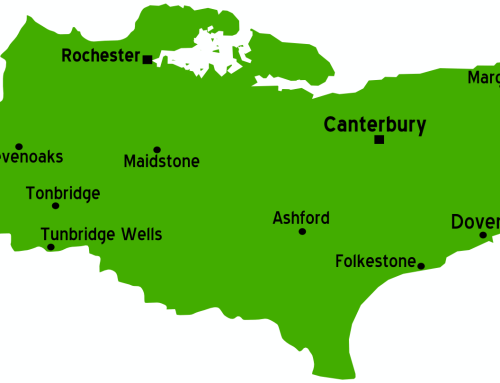
None of this is a surprise to those of us who watched the school’s history. In 2015 Weald of Kent, based in Tonbridge, opened a satellite site in Sevenoaks, about nine miles away. New grammar schools are not legally allowed, so it was presented as an annexe of an existing school. The issue of surplus places was raised at the time, but the plan had the backing of pro-selection parents and Conservative councillors and MPs. It appears that this was always a political project, and a decade on the school is clearly struggling to fill two schools’ worth of places in two neighbouring towns.
What it means for children
The practical result is more of the same for local families. Children can now sit either test, or both. Parents will feel pressure to organise tuition for two different exams, and many children will sit two stressful exams where one would do. They will get confusing results with one pass and one fail, or two fails and a great deal of disappointment. It is hard to see how extra testing serves the best interests of ten-year-olds in the area.
The real problem
Grammar schools trade on the idea that their entrance tests identify a particular level of academic ability. This story shows something quite different. Ability, as measured by the 11-plus, appears to rise and fall with a school’s admission numbers. A child should not become “grammar school ability” because a grammar school has empty desks, but that is how it works in practice.
There is no independent scrutiny of what any selective school’s academic standard actually means. Grammar school entrance tests aren’t regulated by Ofqual or any national exams body, and the providers who set them see the market as a commercial opportunity. As Schools Week reported, parents are paying hundreds of pounds a year for preparation, while the tests themselves remain a “wild west” of varied formats and providers.
If grammar schools are struggling to fill their places, the answer is not to keep adjusting how we divide ten and eleven-year-olds. We should ask why we are dividing them in the first place.
In the meantime, the government has acted on the hidden costs of education, such as the cost of school uniform. If it cares about the cash parents are paying for schooling, the 11-plus should be next on the list. Access to state education should be free and fair, and it shouldn’t be decided by how much families can afford to spend on preparation, or by how many empty desks a school needs to fill.